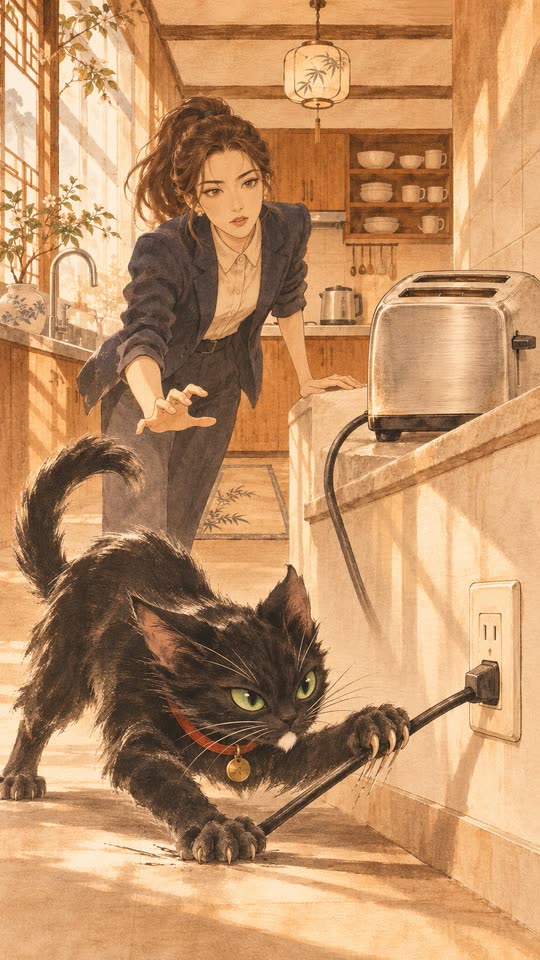
What is a short drama?
A short drama is a scripted series told in very short episodes, usually one to three minutes each, and filmed in vertical 9:16 for phones. A complete story often runs for dozens of episodes, and almost every episode ends on a cliffhanger that pushes you to watch the next one.
You will also see short dramas called vertical dramas, micro dramas, mini dramas, mini series or short series. In most conversations these words mean the same thing. “Mini series” is the one exception: on television it traditionally means a limited run of full-length episodes, so the word can point to either format.
How is a short drama different from TV or a TikTok clip?
Compared with a TV series, a short drama cuts everything that does not move the plot. There is little scene-setting, and conflict arrives in the first few seconds. A whole season can be watched in a single sitting, one tap at a time.
Compared with a one-off TikTok, a short drama is serialized and scripted. It has recurring characters, a story that builds, and a reason to come back. Viewers follow the story rather than a creator's personality.
The format at a glance
| Typical short drama | |
|---|---|
| Aspect ratio | 9:16 vertical |
| Episode length | About 1–3 minutes |
| Series length | Often dozens of episodes |
| Structure | Fast hook, escalating conflict, cliffhanger |
| Where people watch | Dedicated apps, TikTok, YouTube Shorts, Instagram Reels |
Why did short dramas take off?
The format grew out of three habits. People already watch video vertically, in small gaps during the day. Serial storytelling is one of the oldest ways of keeping an audience, from newspaper serials to soap operas. And short video feeds trained viewers to expect something to happen right away.
Short dramas took off in China first, then spread internationally as apps began adapting and producing English-language series. Today dedicated apps such as ReelShort, DramaBox, ShortMax and GoodShort are part of the landscape, and many of them unlock episodes with coins, ads or subscriptions. (We mention them as industry background. Dramai isn't affiliated with these apps.)
Vertical drama, micro drama, mini drama and mini series
These words overlap, and people often use them loosely. Vertical drama points to the frame: the story is shot for a phone held upright. Micro drama points to the length. Mini drama and short series are everyday names for the same thing. Mini series is the odd one out, because it comes from television.
| Term | What it emphasizes | Typical episode | Where you watch |
|---|---|---|---|
| Short drama | The general name for the format | 1–3 minutes | Apps and social video |
| Vertical drama | 9:16 framing for phones | 1–3 minutes | Apps and social video |
| Micro drama | Very short episodes | Under 2 minutes | Apps and social video |
| Mini drama, short series | Everyday names for the same format | 1–3 minutes | Apps and social video |
| Mini series | A limited TV run, usually horizontal | 30–60 minutes | TV and streaming |
In practice, a vertical drama and a micro drama are usually the same show described in two ways. What separates all of them from a mini series is the viewing habit. A mini series asks you to sit down for an evening, while a short drama fits into the five minutes you have while waiting for a bus.
Popular short drama genres
Short dramas lean on tropes that create instant conflict:
- Revenge drama. Someone betrayed or humiliated returns stronger. The satisfaction comes from watching the tables turn.
- CEO and billionaire romance. An ordinary lead and a powerful partner, often with a hidden identity or a contract marriage.
- Mafia romance. Danger and devotion in equal measure.
- Werewolf and fantasy romance. Fated mates, rejected heroines and secret bloodlines.
- Mystery and thriller. A secret in the first scene, with a new clue in every episode.
- Survival. A simple, physical goal and a threat that keeps growing.
You can see the last two in action in our showcase: The Canton Killer Hunt is a mystery set around an ancestral house, and Keeper of the Flame follows a sailor stranded on an island.
What are AI dramas?
An AI drama is a short drama where AI tools do most of the production work. Instead of hiring actors and booking locations, a creator describes the story, and software generates the script, the characters, the images, the video and the voices. You may also see the terms AI vertical drama and AI micro drama, which mean the same thing. For a closer look, read what an AI short drama is.
AI dramas matter because of cost. A traditional short drama is cheap by television standards but still needs a crew and a schedule, which puts it out of reach for most individual writers. With AI, one person can see a story on screen and find out whether it works before committing much money to it.
The approach has real limits, and it is better to know them up front:
- Consistency is hard. Without care, a character's face changes from shot to shot. Good tools keep a locked reference for each character.
- Acting is limited. AI video handles clear, simple actions and expressions better than long, subtle performances.
- Long series cost more. Video is priced by the second, so a 30-episode series is a much larger project than a single short.
- A person still has to decide. AI can draft a story, but knowing which version is good is still a human job.
If you want to go deeper on the idea side, our guides cover hooks, cliffhangers and scripts. To see how the production steps fit together, read how to make an AI short drama.
Which format should you make?
If you are starting out, make a short drama in the vertical format. It is the cheapest way to test a story, because a single episode is enough to show whether the hook works. A mini series needs a much larger budget and a commitment to hours of screen time before anyone has seen a frame.
Start with one complete episode, or even a 30 second short, and show it to a few people. Watch where they lose interest and whether they ask what happens next. If they do, write the next episode. If they don't, change the first few seconds before changing anything else, since that is where most short dramas win or lose their audience.
Then decide how far to take it. Some stories work best as a single short with a twist. Others need ten episodes to pay off. A short series with a clear ending is usually better than a long one that runs out of ideas halfway through.
What makes a good episode?
Most strong episodes share four beats, even when they last under a minute:
- Hook. Open on a question or a shock. Viewers decide within seconds whether to stay.
- Conflict. Put two people, or a person and a problem, in direct opposition.
- Clue or turn. Change what the viewer thinks is going on.
- Cliffhanger. Stop before the answer. The last line should create the next question.
Dialogue stays short and characters are easy to read at a glance, since many people watch on a small screen, sometimes with the sound off. That is also why subtitles matter so much.
How do you make a short drama?
Traditionally, a short drama needs a writer, a director, actors, locations and an editor, and a series is shot quickly, all at once. That cost keeps many writers from ever seeing their story on screen.
AI tools have changed the first draft of that process. With an AI short drama maker like Dramai, you can start from one sentence, develop the script, create characters who stay consistent from scene to scene, generate each episode in vertical video, and add subtitles and dubbing. Read our guide on how to make an AI short drama to see each step.
Short drama FAQ
- How long is a short drama?
- Episodes usually last one to three minutes. A complete series often has dozens of episodes, and some Dramai examples are shorter still, at around 25 to 60 seconds an episode.
- What is the difference between a short drama and a micro drama?
- There isn’t a strict one. Both describe short, serialized vertical stories.
- Are short dramas only made in China?
- No. The format became popular there first, but English-language series are now made for international audiences.
- What is an AI drama?
- An AI drama is a short drama made with AI tools. AI handles the script, characters, storyboard, video, subtitles and voices, while a person decides what the story is and approves each step.
- Is a mini series the same as a short drama?
- Not usually. A mini series is a limited TV series, normally horizontal, with episodes of 30 to 60 minutes. A short drama is vertical, with episodes of a minute or two, though some people use mini drama to mean the same thing.
- Can one person make a short drama?
- With AI tools, yes. You still make the creative decisions, including the story, the characters and what stays in the final cut.